Recently, a research group led by Prof. ZHANG Jinsong at the Institute of Genetics and Developmental Biology, Chinese Academy of Sciences, identified a transcription factor GmMYB331, which cooperatively regulates soybean seed oil content and seed size, providing an important candidate gene for soybean molecular breeding (Figure 1).
The findings were published in Journal of Integrative Plant Biology (DOI: 10.1111/jipb.70101).
China is a primary consumer of soybean, importing nearly 100 million tons annually. The domestic soybean self-sufficiency rate of us is only less than 20%. For China's soybean industry, breeding high-yield and high-quality soybean cultivars is extremely urgent.
The imported soybeans in China are primarily used for soybean oil extraction, making high seed oil content a crucial criterion for superior soybean quality. However, the biosynthesis and accumulation of fatty acids constitute an extremely energy-intensive process. If we excessively manipulate genes involved in oil biosynthesis solely to increase seed oil content, only to end up with reduced yields, it would be totally counterproductive.
The findings indicate that the expression level of target genes needs to be finely manipulated during molecular breeding processes. GmMYB331 regulates genes of both oil content and seed size simultaneously. However, it also exhibits preferential recognition of the two kinds of genes. Under certain optimal expressing conditions, we may obtain soybeans with both high yield and high oil content.
The discovery of GmMYB331 provides significant insights for soybean molecular breeding and it may offer a viable pathway to resolve the contradiction between high yield and high quality.
Figure 1. GmMYB331’s regulatory mechanisms at different concentrations. (Image by IGDB)
Contact:
Prof. ZHANG Jinsong
Institute of Genetics and Developmental Biology, Chinese Academy of Sciences
Email: jszhang@genetics.ac.cn
 CAS
CAS
 中文
中文



.png)
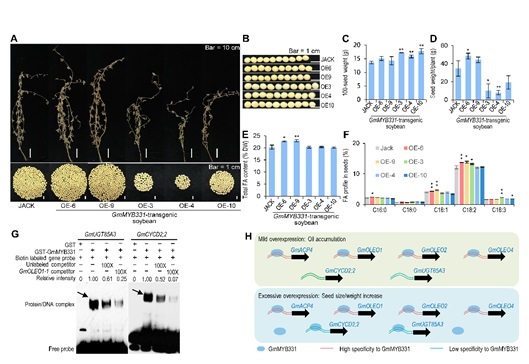 Figure 1. GmMYB331’s regulatory mechanisms at different concentrations. (Image by IGDB)Contact:Prof. ZHANG JinsongInstitute of Genetics and Developmental Biology, Chinese Academy of SciencesEmail: jszhang@genetics.ac.cn
